

A SIMPLE SOURCING CHOICE
A circular story, told in five steps
Tree Free paper transforms sugarcane waste fiber into a practical paper solution for organizations building more sustainable sourcing strategies. The process connects agriculture, manufacturing, distribution, recycling and verified carbon offsetting in one integrated lifecycle.
A SIMPLE SOURCING CHOICE
A circular story, told in five steps
TreeFree paper transforms sugarcane waste fiber into a practical paper solution for organizations building more sustainable sourcing strategies. The process connects agriculture, manufacturing, distribution, recycling and verified carbon offsetting in one integrated lifecycle.
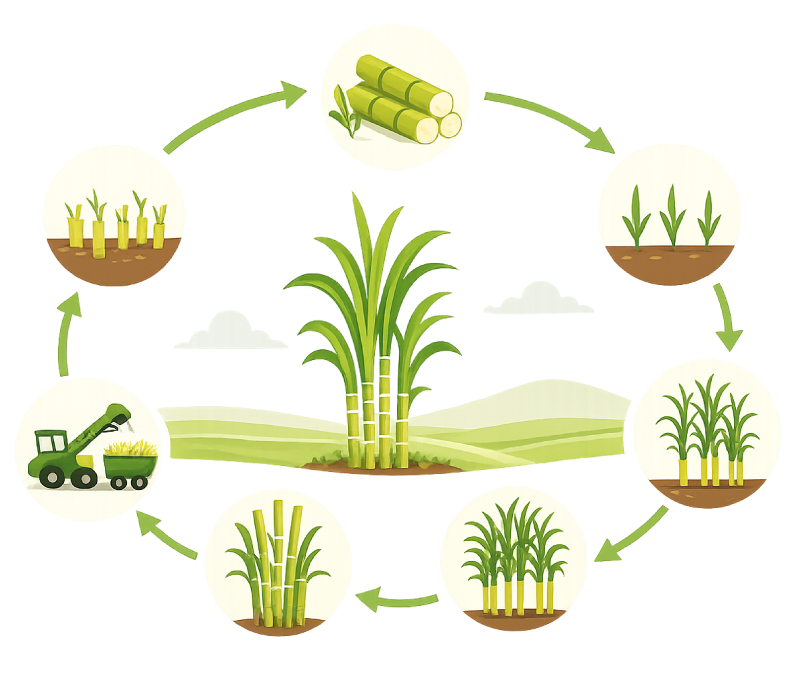
Sugarcane grows fast.
Sugarcane can be harvested every 12 to 13 months, making it a rapidly renewable source of fiber compared with conventional tree-based raw materials.
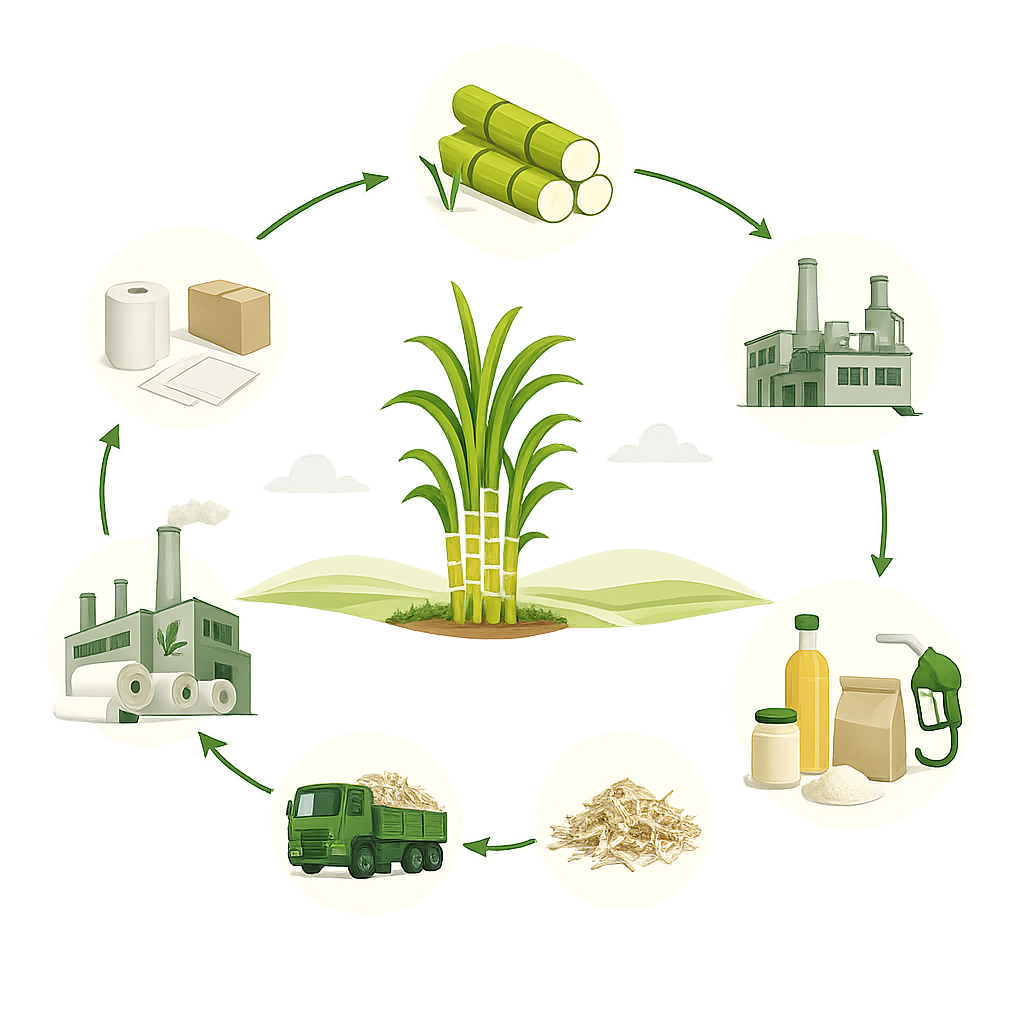
Bagasse becomes the resource.
After sugarcane is processed for food, beverage, biofuel and ethanol production, the remaining fiber—known as bagasse—is recovered and transported to a nearby paper mill instead of being burned or sent to landfill.
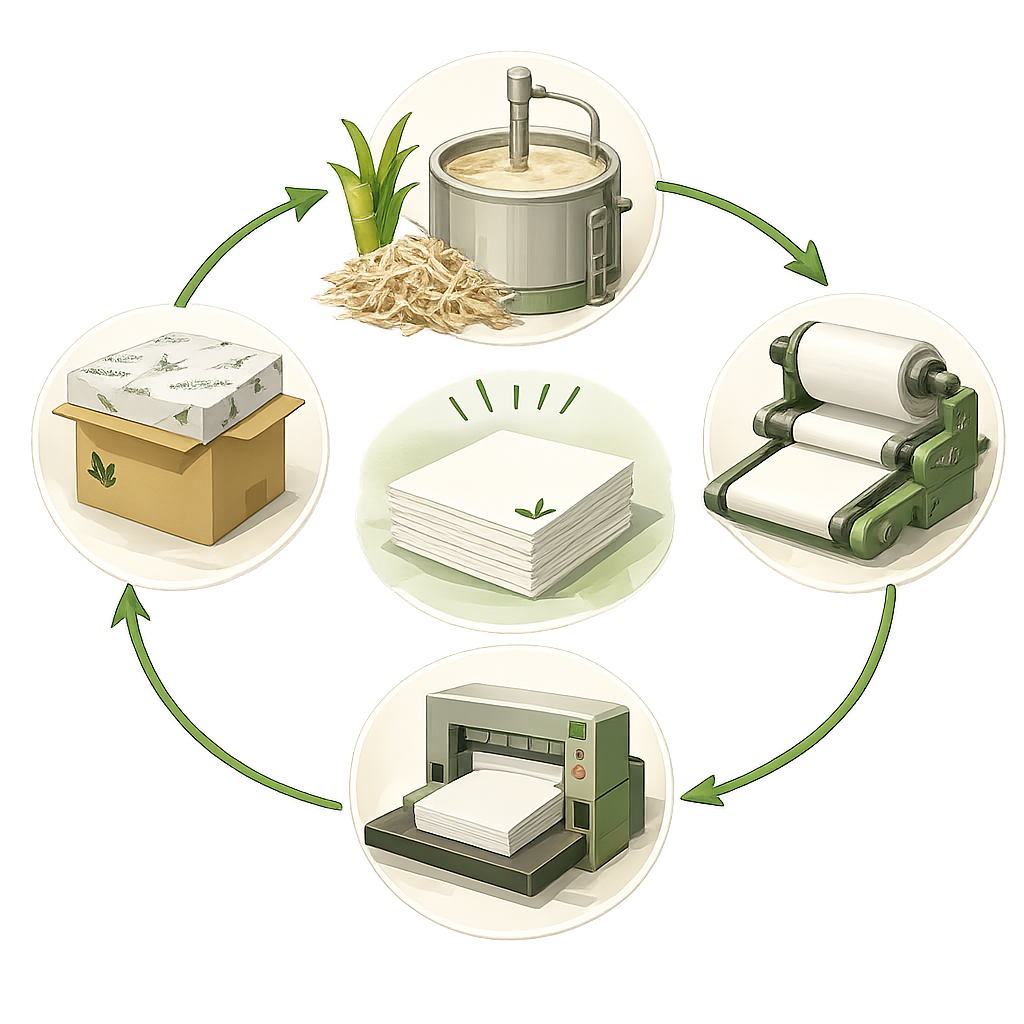
Fiber becomes paper.
The recovered sugarcane fiber is processed into pulp, formed into paper, cut to size and packaged for use. The result is a familiar office paper with a very different raw-material story.
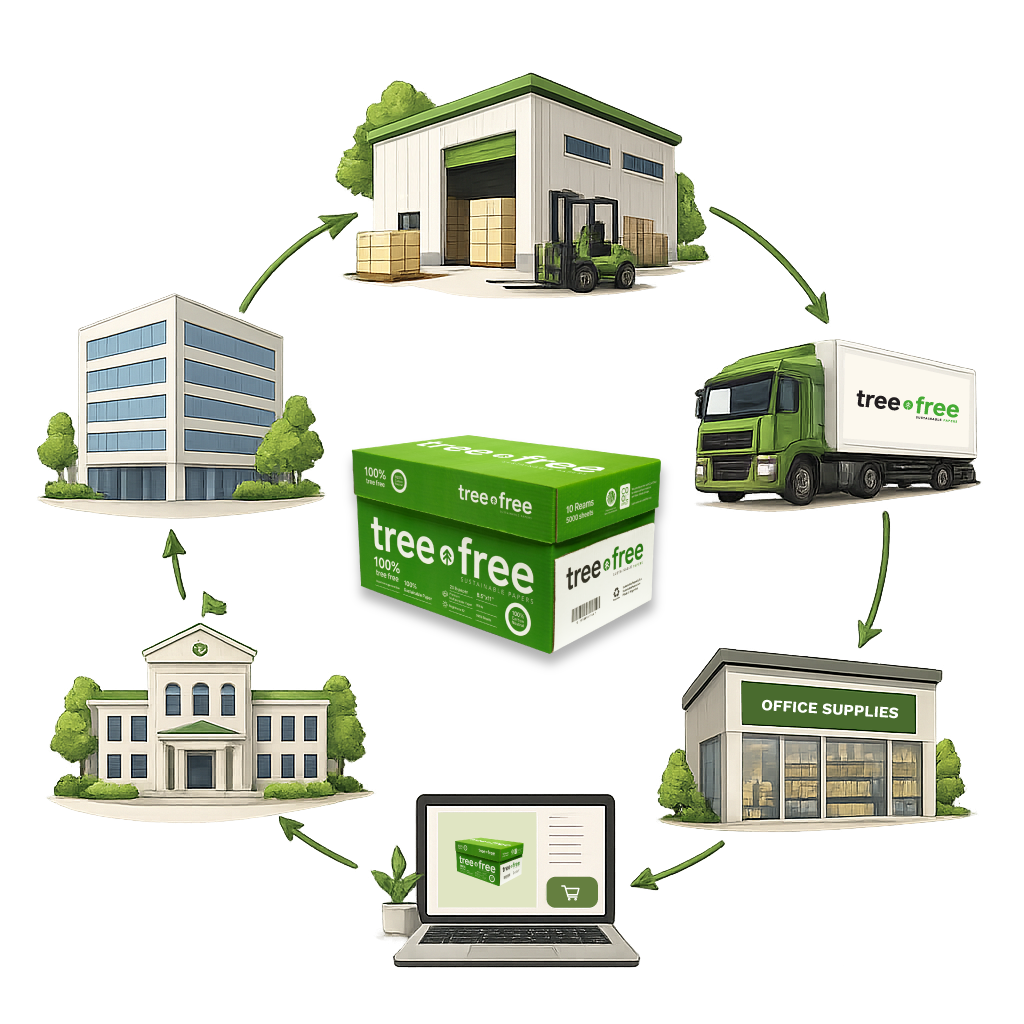
Paper reaches the customer.
Tree Free paper moves through warehouses, distributors, office-products dealers, retail outlets and online retailers, reaching businesses, institutions, colleges, universities and individual customers.
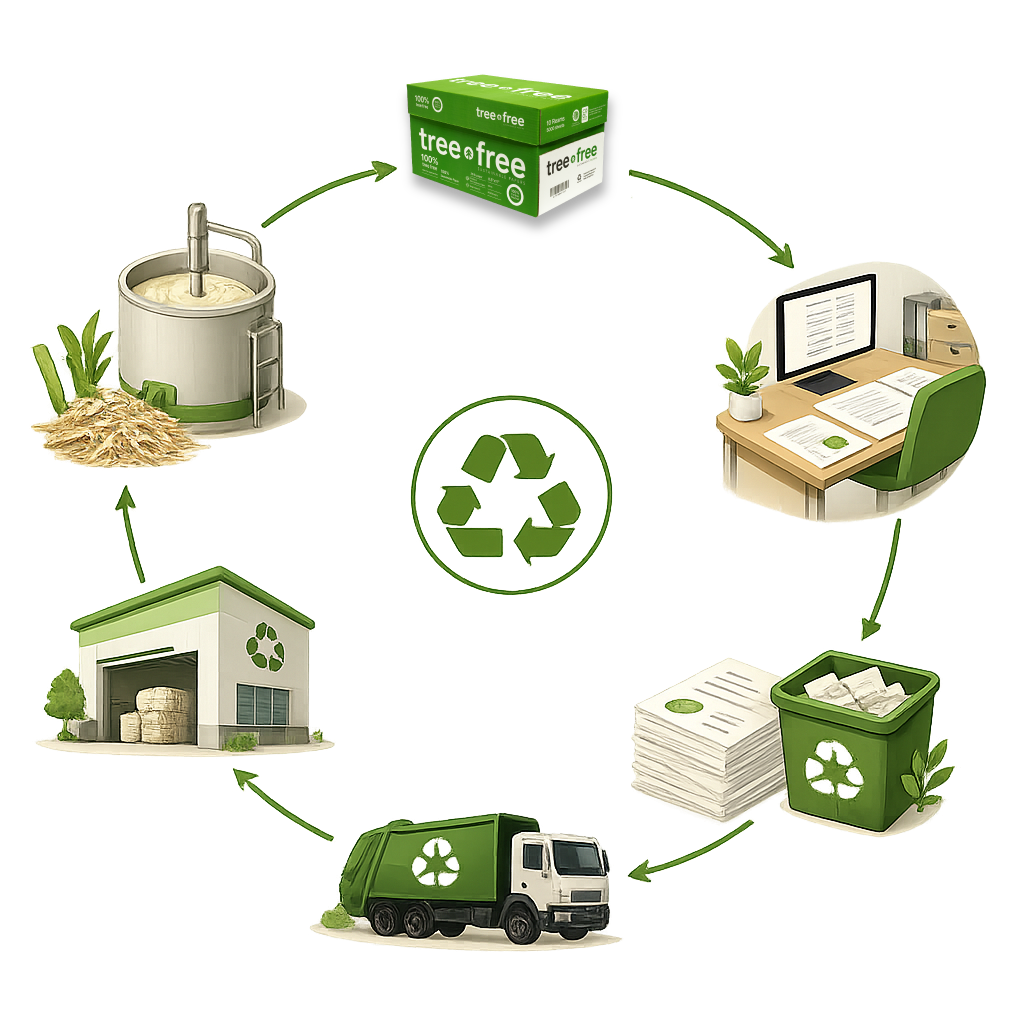
The paper stays in the system.
After use, customers recycle Tree Free paper through existing recycling systems, helping keep fiber in circulation and supporting a more circular paper economy.
Third Party Alliances
Through extensive partnerships with third-party organizations, Tree Free is able to validate sustainability standards and further its mission to make a positive impact on the environment for future generations.
Emissions from the manufacturing, packaging and distribution of Tree Free’s multipurpose paper have been offset by SCS GLOBAL and verified carbon credits purchased from CoolEffect Carbon projects operating under the Climate, Community & Biodiversity Standards.